How Your Limited Resources = Creative Expansion
Hello creative souls, and welcome back. Today's topics is one of my favorites… and here's why.
This is not a concept I created. This is something that I learned organically and once I went back and looked at it in retrospect, I was like, "Wow, that was cool. Now I can use this with intention for every one of my future creative endeavors." The idea here being that we all have a limit on our resources of some kind, and we can use that limitation to stop us in our tracks and keep us from creating our amazing visions - or we can use those limited parameters to become even more creative.
I'm going to exemplify this with the story of the time that I learned it organically learned. Like I said, upon looking back, I realized it served us so well that we began utilizing this perspective regularly regarding limited resources: time and money. We need time to create and money to buy any of the things needed to create, whether that's extra humans to be a part of the project, lights, or a new guitar. Whatever it is, money will typically help us get there.
A few years ago, we premiered a show called I Haunt You, a play on the expression I heart you, and is obviously a haunted love story. It's really beautiful, special piece of work, and I want to take you through the creation story. I promise at the end you'll get the lesson and be able to apply it to your own visions. I actually had an inspiration back when I was in college and watched one of my professors one-man shows. It was brilliant. He was acting, he was dancing, he had this intricate set. It had this beautiful and rich sort of ethereal universal theme to it. It tugged every little heart-string I had. I was so inspired and impressed with his ability to do this one-man show and captivate me for nearly two hours. I left that small theater on cloud nine like oh my god wow that's so cool. At the time, my husband and I were already deep in the ballroom dance world, so we were very well versed in performing together. By then we'd actually been performing together for several years since high school, but not necessarily in partnership dance. We were an established duo at this point. We spent most of our time on stage together. In my long drive home that night I knew I wanted to do a duet, a show with just the two of us. We had been producing shows with about 20 cast members at the time. I wanted to do a show with just the two of us and see if our performance and creative skills were strong enough to hold the stage, just the two of us, for a full length show. That was the goal.
I went home and told him all about it. I got a notebook wrote Duet as a working title. I don't know what it's about, I just know it's a two-man show. Two-man, one man, one woman. We threw ideas at it for quite a while. It was in the background of my other more active creative work for guess how long… 10 years. Not because it's so amazing that it took me 10 years to create, but because it was in the background for a long time and I wasn't sure what it was. Every now and then I'd kind of throw something at it and see if it stuck. For a while I thought it was going to be a short dance film. I wasn't sure, but it was building these themes as being this really romantic, kind of ethereal story. We produced so many other projects on the way to this.
And then this thing happened in 2020 that you will likely remember called COVID. We were in the midst of producing a show with our fuller cast and everything got shut down, so we couldn't continue producing that show. It was really sad because it was fixing to be a really cool show. Time went on and our theater was closed for quite a while and we were depressed like most people were. As we started reaching back toward what we will do when we can finally reopen our theater again, we had two ideas on the table: one was to bring back a show that would have a cast of seven, and the other one is to finally figure out what Duet actually is with parameters being so limited because of COVID. We still weren't really allowed to meet in large numbers. This became the divine opportunity to go all in on Duet and give ourselves the time to focus on this project. So now's the time. I live with you. I can't stay away from you. We're in each other's COVID bubble. It'll be all right.
We started focusing on Duet and began to really figure out what that was. The story started taking shape as this kind of haunted love story; but I was like, Raymond, I'm writing this script, but like, how am I supposed to only put two characters in here? Like, there's some side roles. There's some other people in here. How am I supposed to do this?I need more people. Well, first of all… COVID. Second of all, the goal of the project was to just be two people. So how do we do this? We had this limited resource, two people. We also had limited money. Most of our projects are filmed out of our own pocket. It's not like we have huge investors coming in throwing millions of dollars at us to create elaborate sets and have an orchestra. We had limited resources. What happened over the course of this project is we set a parameter and said okay, we've got our small immersive theater. We're going to do this show in the round. It's going to be really up close and intimate, and we are going to not only play in the center of the audience, but we're also going to play around them, behind them. It's a spooky story. So how fun would it be to spook up behind you in the dark when you don't know I'm coming. And what are we going to do with these 27 other characters?? There are all these little teensy roles here and there, but there are that many characters in the show. How are we going to do this?
We decided that real people would be in the center and non-real people who weren't really there in the flesh would be around the outside. So I could have a conversation with the audience sitting between me and the imaginary actors “behind” them and I could talk to those other characters. I would face this way and make eye contact with nobody except for the human in my imagination. We put their voice into the soundtrack and invite the audience to imagine the people that weren't really there. I would say about once every time we play this show, the first time we do it, which I think is in scene five, inevitably someone will look behind them because they think there's another actor behind them and it's so fun. It takes everything to not break and just giggle at it because it's working. They believed it. Then they turn back around and they kind of giggle like, "Haha, they got me. This is fun. I'm using my imagination to pretend that that person she's talking to is actually there.”
We didn't reinvent a wheel here, but we said, "Hey, people have imaginations. What if we just ask them to use them?"
In doing so, we allowed ourselves to bring in these 27 other roles without bringing in 27 humans, which wasn't possible with our budget and COVID rules at that moment in time. The next piece was, well, let's keep the set extremely minimal, like extremely minimal. We have this one box on wheels. That's it. That box is going to be everything: a kitchen table, a chair, a bathtub, whatever we need it to be. We also use extremely minimal props, only the essential ones. A phone is an important part of the story, so we can use the phone, but most of the other stuff we're not even going to use. We also decided to go bonkers on costumes. Part of the reason we did that is because we each play four different characters in the show, so we wanted to make it really easy for our audience to understand which character we were playing in each moment.
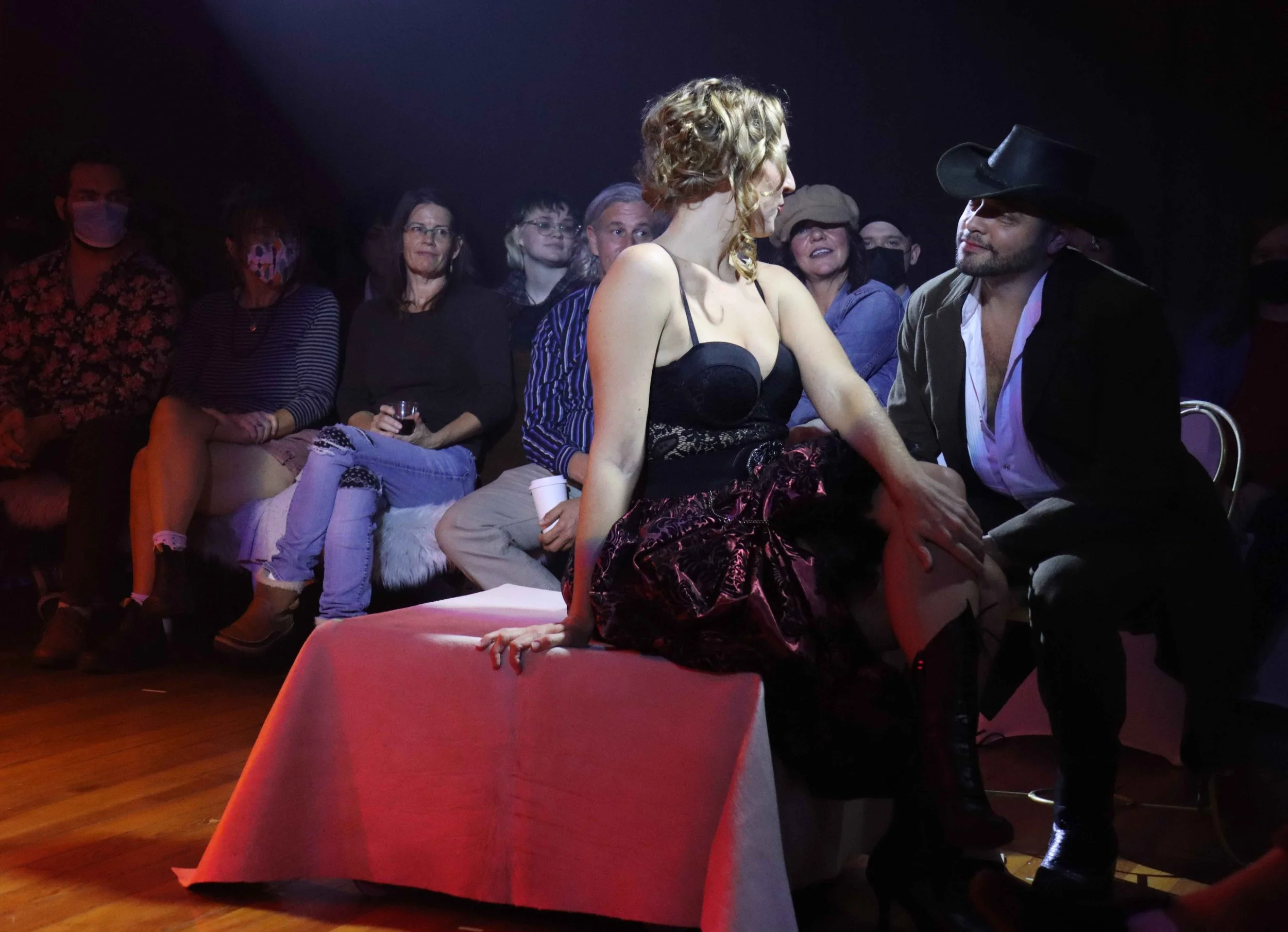
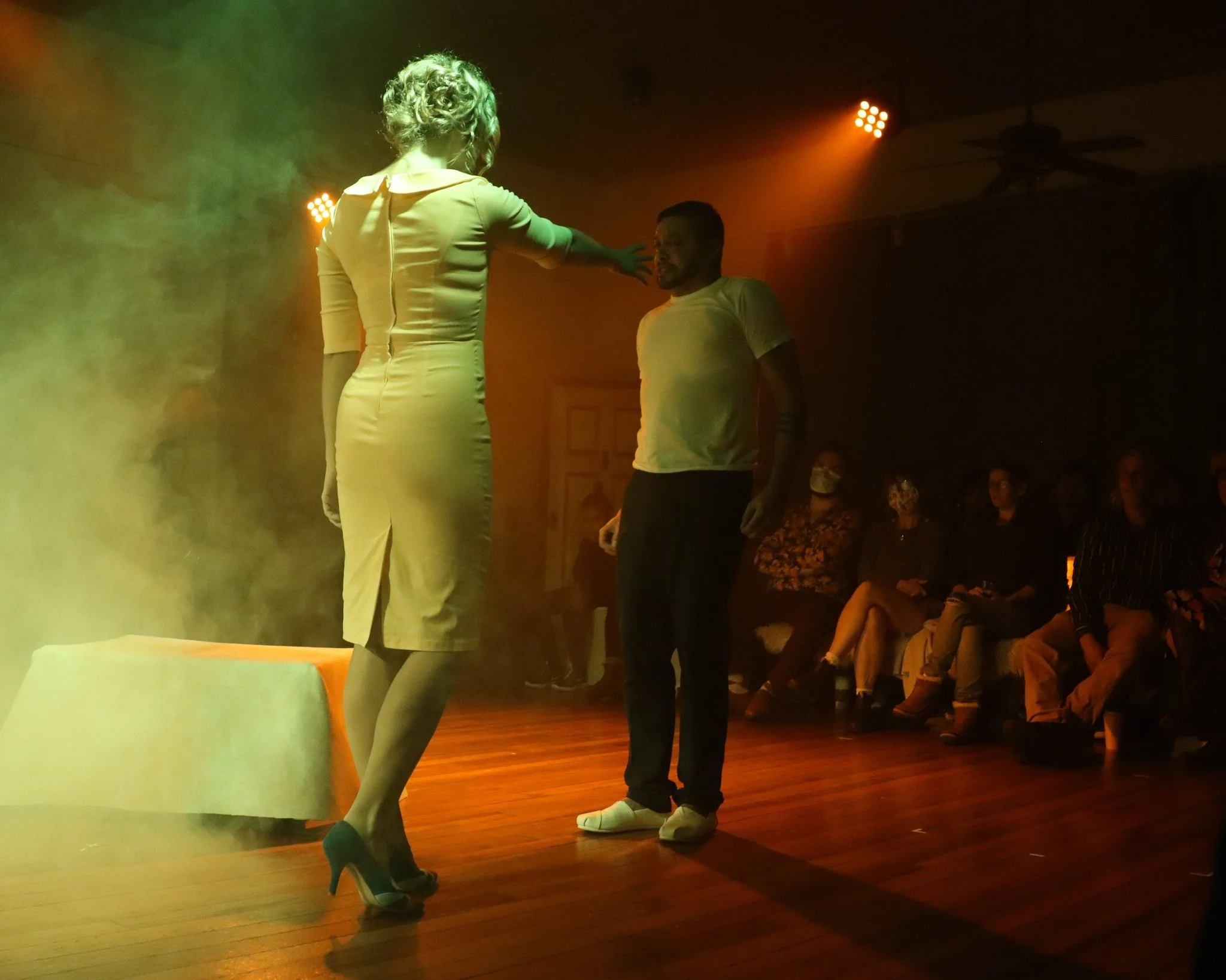
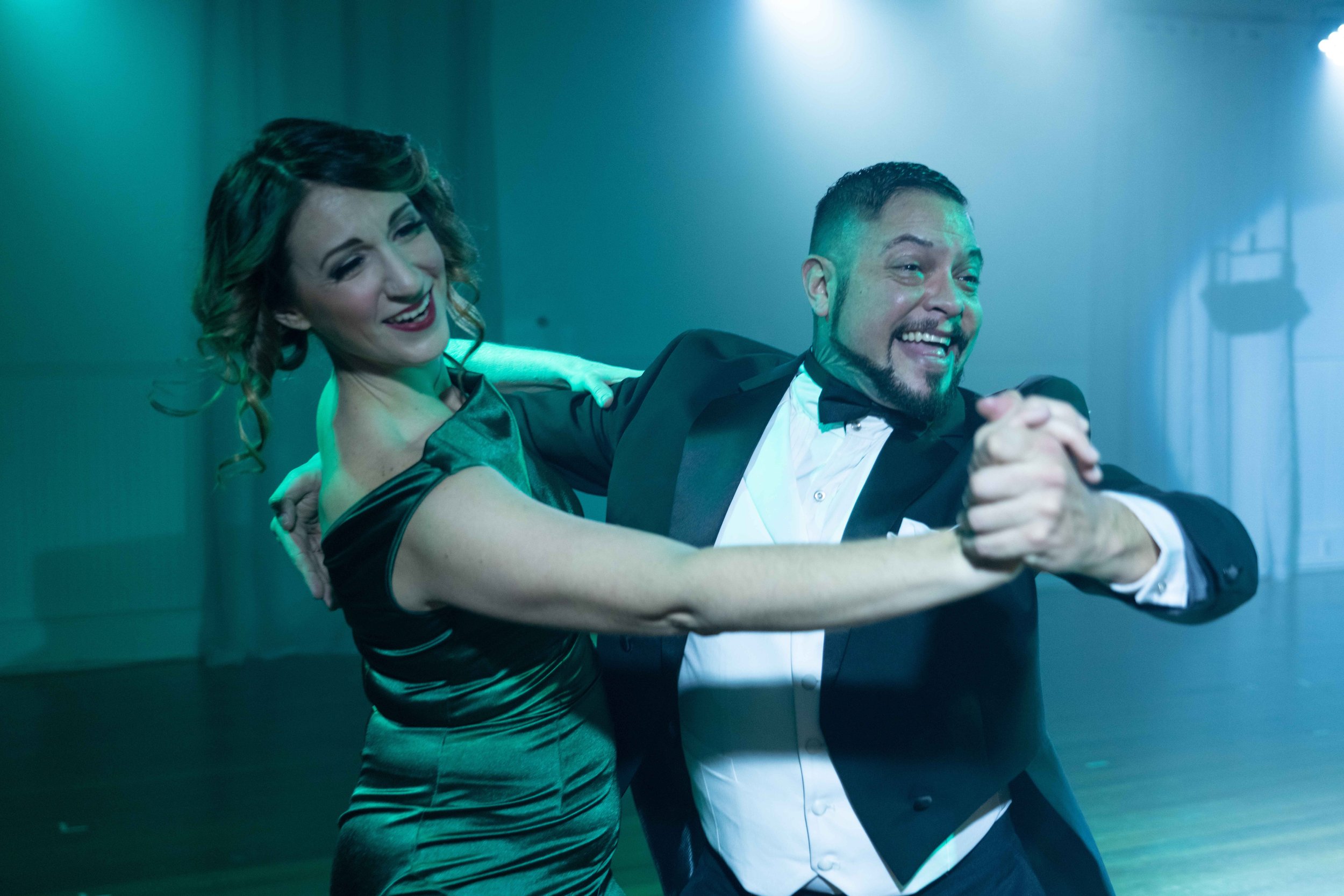
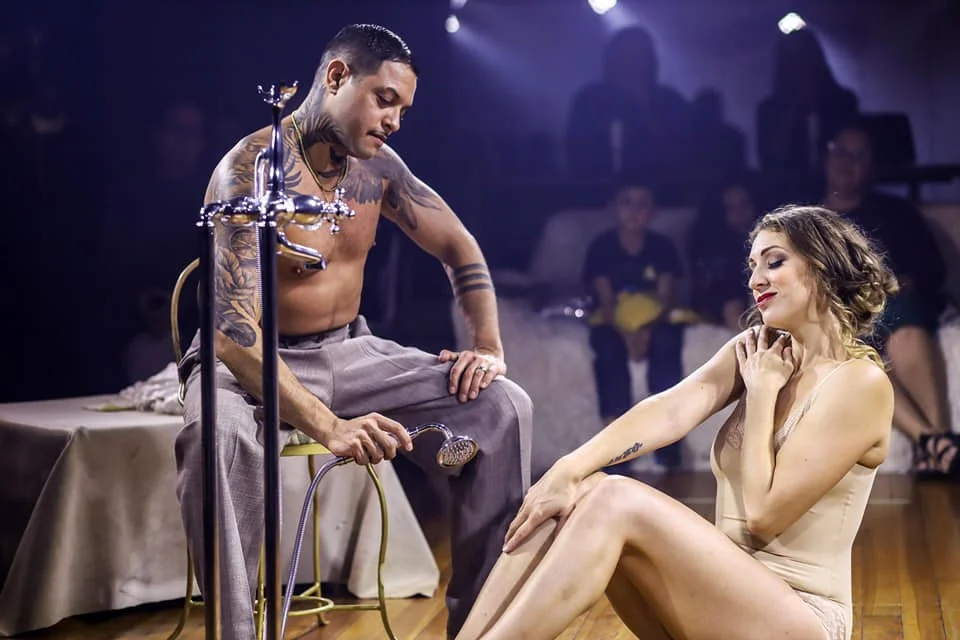
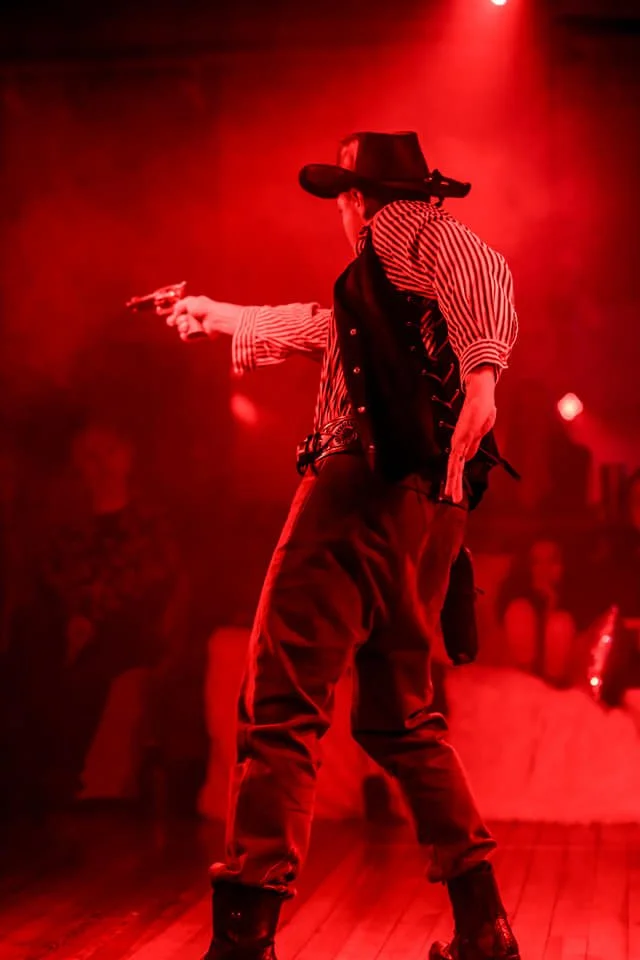
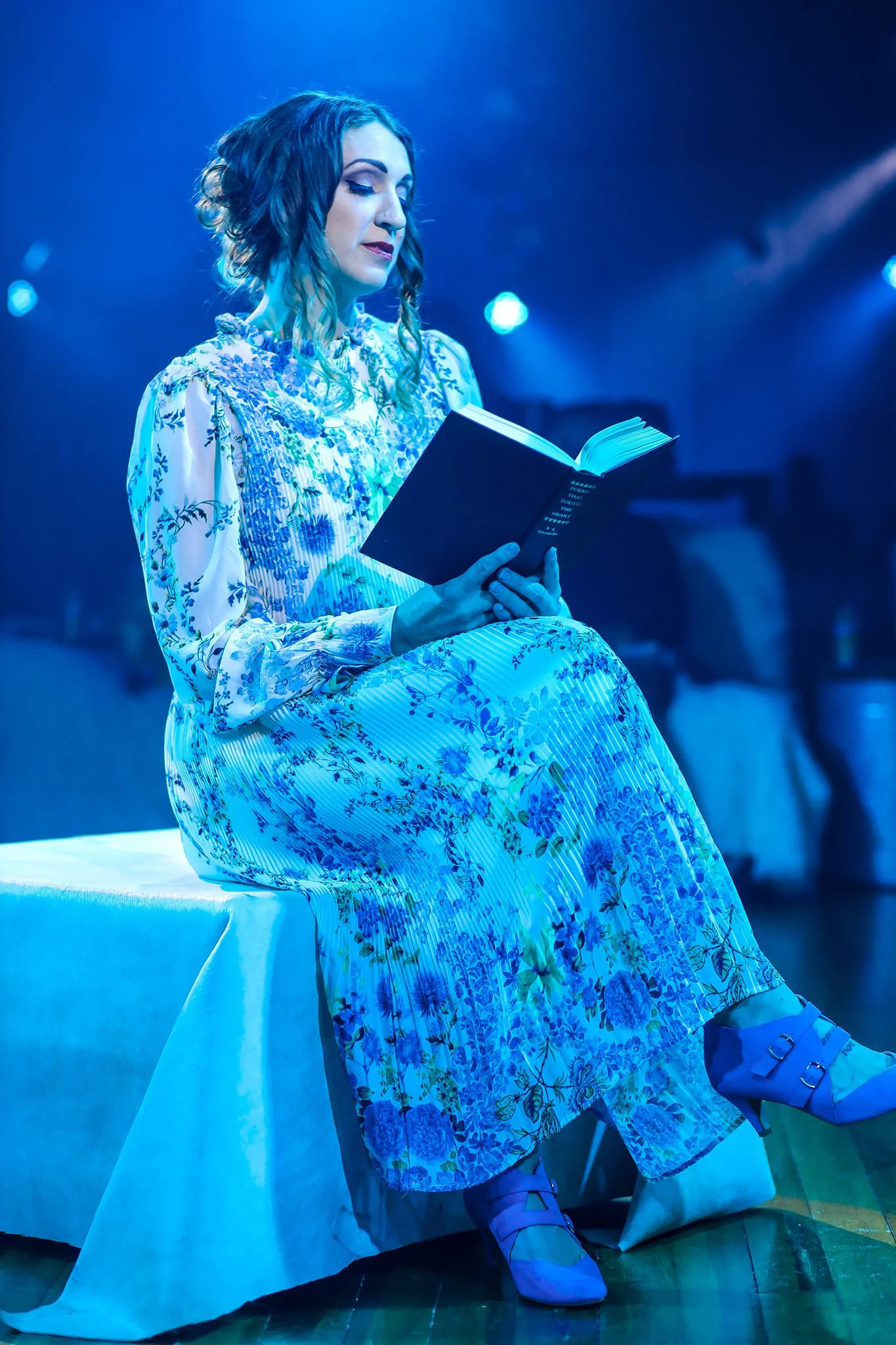
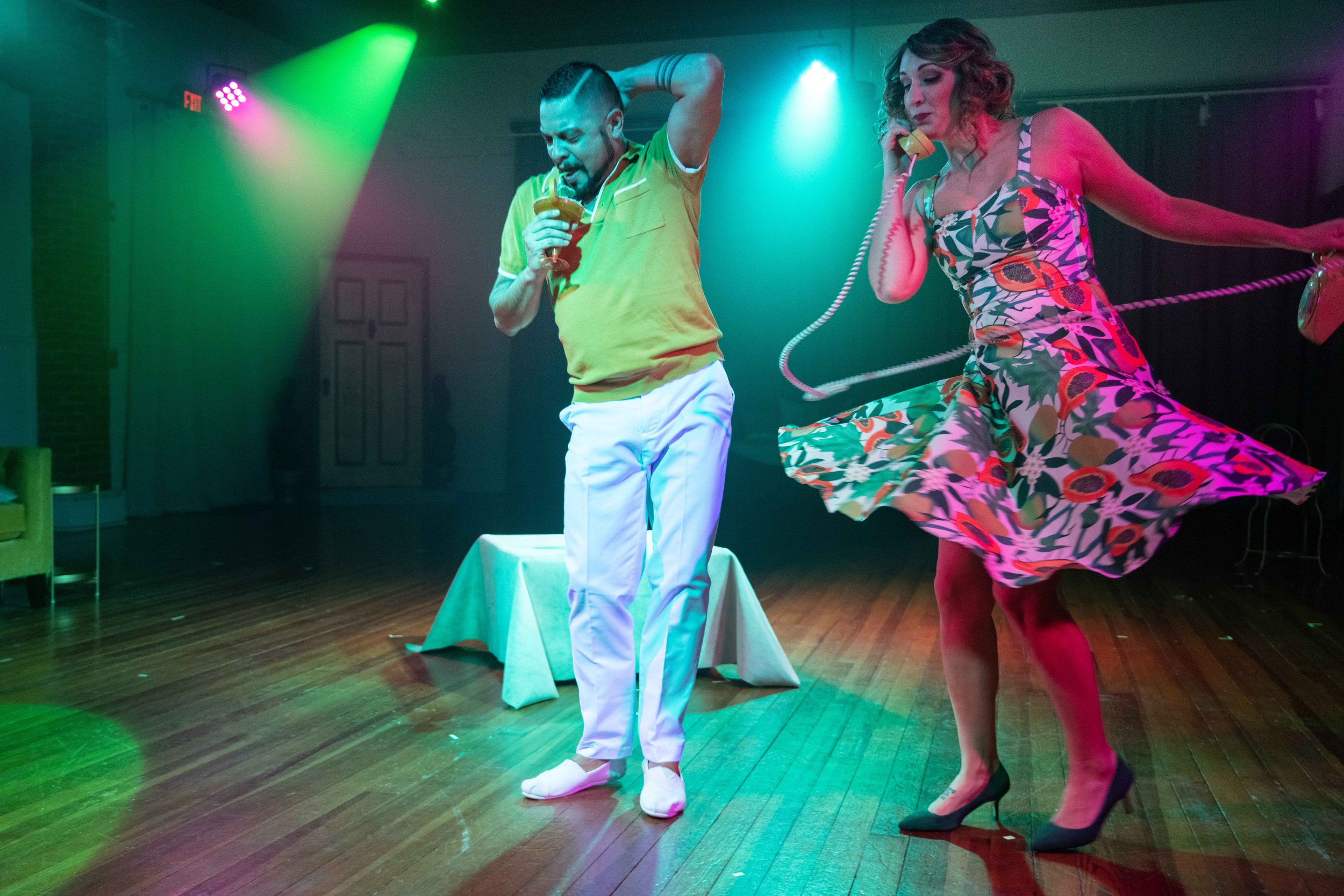
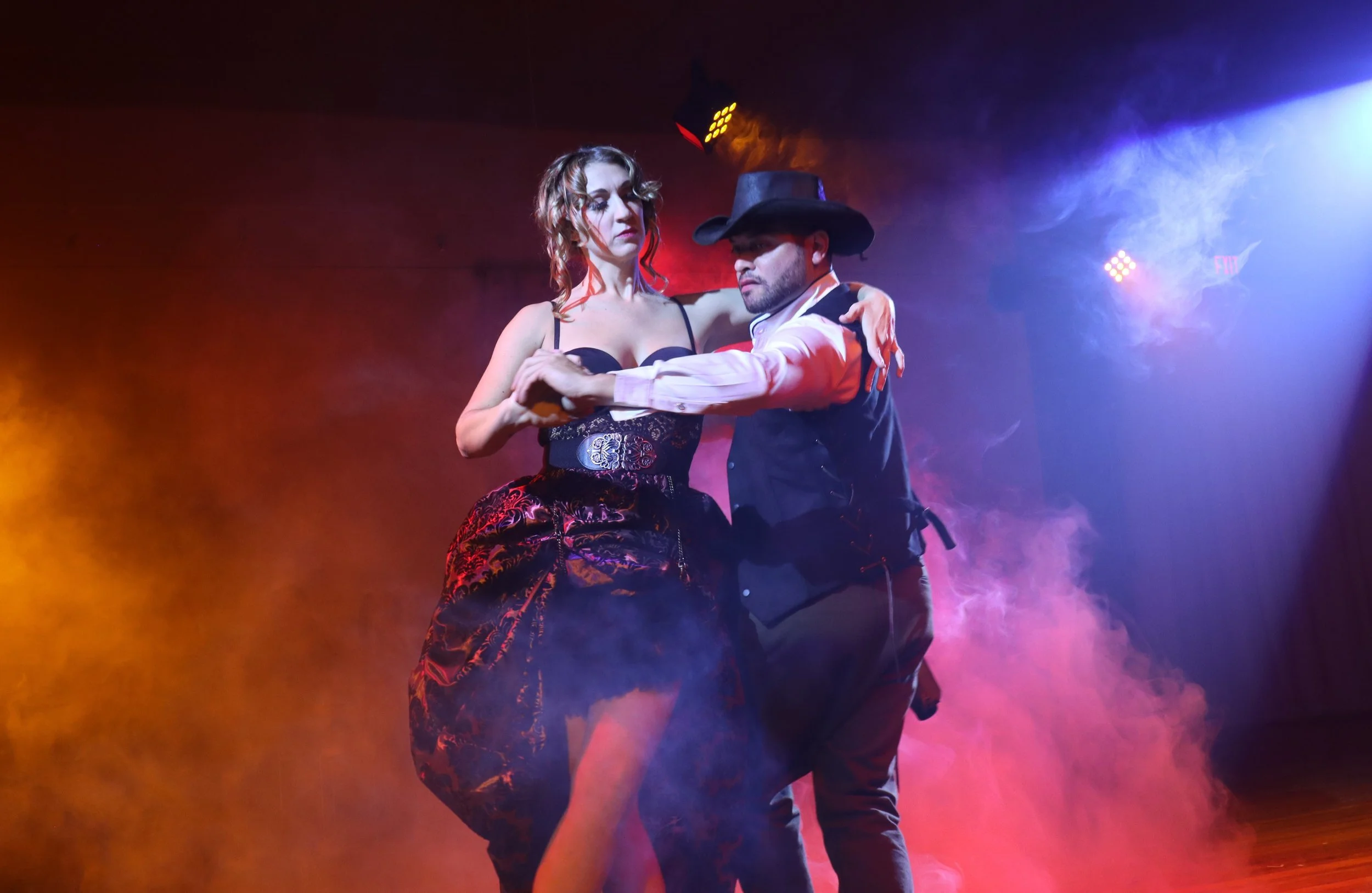
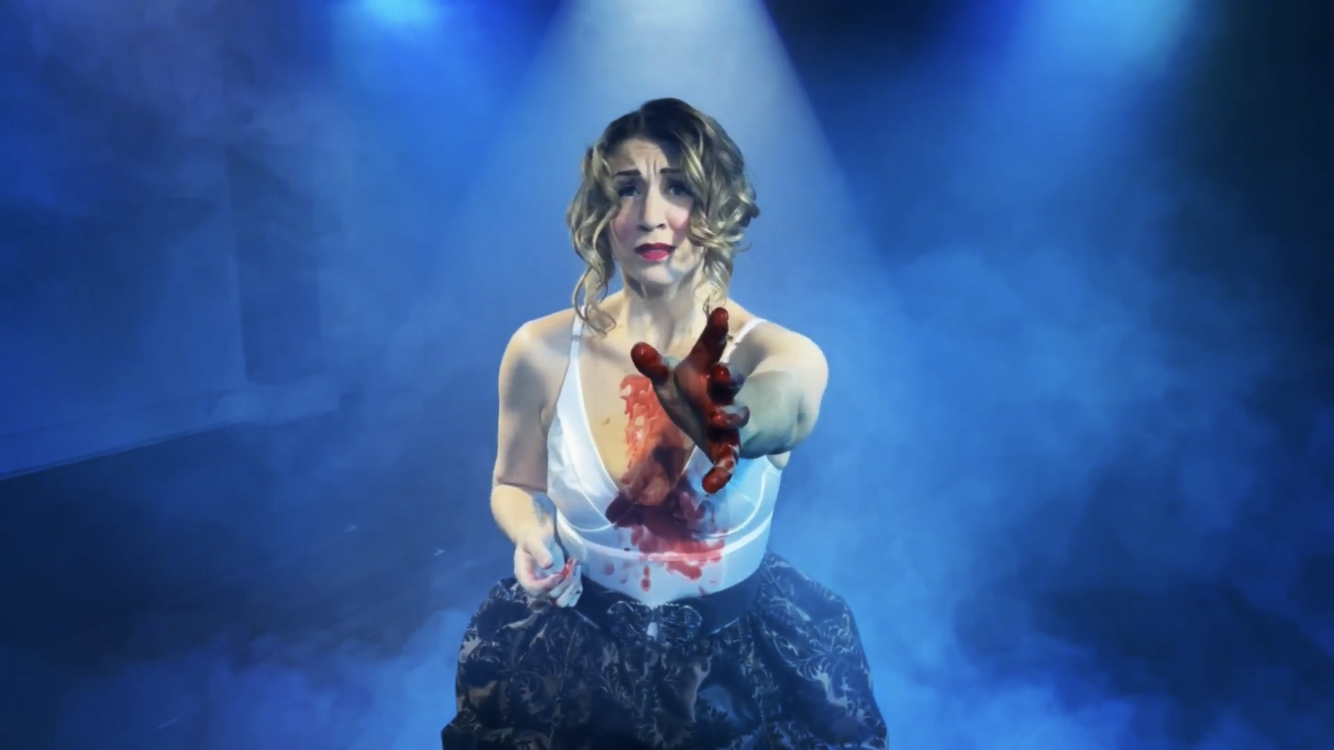
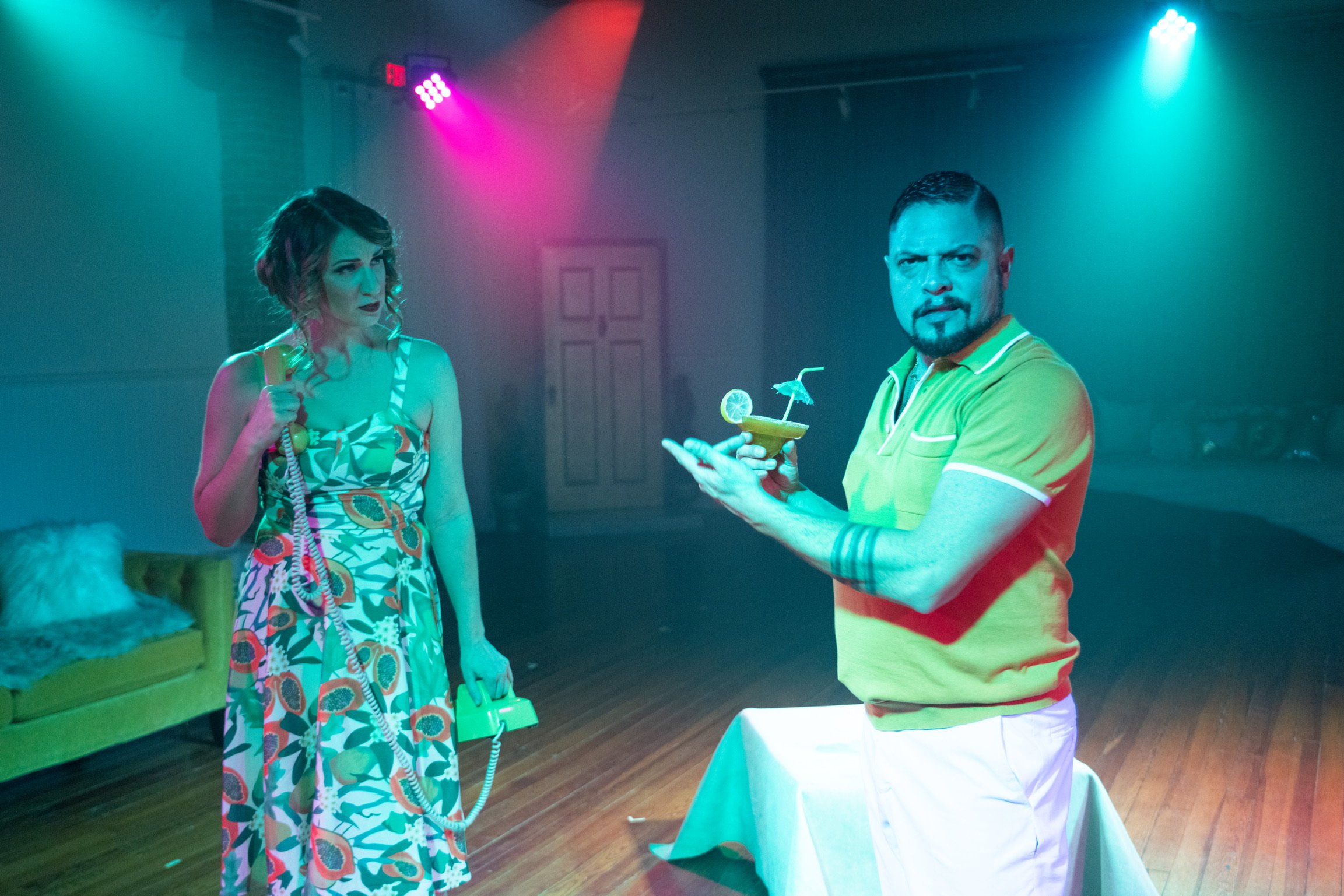
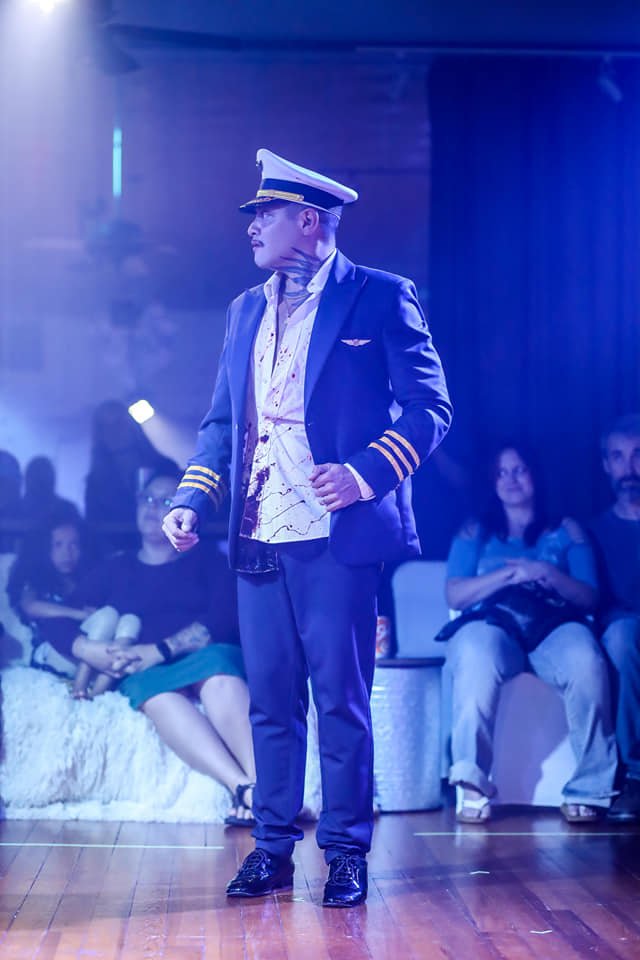
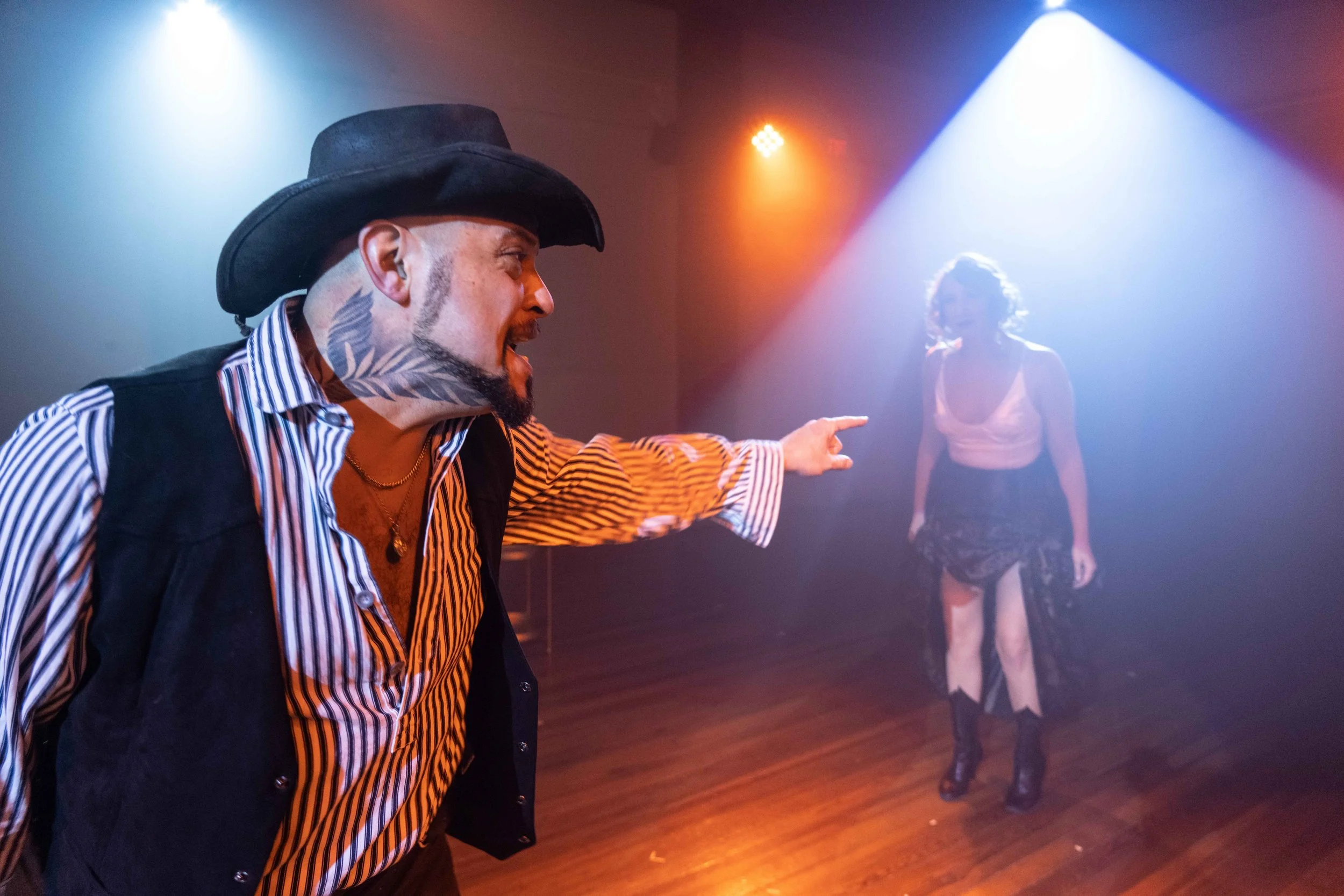
The show changes in the soundscape, it changes in the lighting tone, it changes in our costumes. We've essentially created this kind of style, this voice if you will, a parameter of a certain type of entertainment. We felt a little risky putting it out there. Are people going to get this? Are people going to accept that there's nothing on stage except for this little box that we push around? Are people going to accept that 20 of the characters aren't there at all? They're only there in voice-overs. Are people going to accept that I'm sometimes pantomiming an object that's not there? Are people going to play with us in this play? It's kind of risky. We launched the show and she got rave reviews. It's a phenomenal show. I'm really really proud of it. Once we took some of these risks - and the risks were taken solely out of limitations, limited time, limited money, limited people to be involved - it was a success. What happened was what we wanted to happen, which was to invoke people's imaginations. I wanted it to feel kind of like reading a novel. Let's say we’re reading the same one and the author describes a room. Even though the author is describing it beautifully, we each picture the room differently per our own imagination. I wanted the show to feel like that. If I’m pantomiming a door, what does the door look like to you versus what someone else envisions?
We literally employed the audience's imagination to fill in the gaps of real tangible objects and humans that weren’t really there. It was so much fun. The impact on the audience was so profound that after we went hooray, yay to us, tears, pat on the back, we did a good show, we realized we'd actually really started to define our voice as a theater company and that we would actually use this again - this very limited set, essential props, only costumes galore, and a soundscape to build in what visually isn't there. We created a voice. The limited resources on that show served us so well, not just on that project, but for every project we've done since then where we've used some element of this.
Now, would the show have been better if we just had unlimited money and unlimited actors and space to use all the things? I kind of feel like no. What it would have lost is the awe the audience had with the activation of their own imagination. What if I put the whole set out there for you and you can actually see the door I’m opening? Cool. It's a pretty door, but I didn't ask your imagination to turn on. What I might have accomplished by having those 27 actors is that I had 27 actors. Cool. I got to pay them all, but then I would have lost the ability to ask for the audience's imagination to come alive. I think that is worth more than having the door and the 27 actors. I think we actually grew creatively and the audience experienced something really cool. What most of our audience members say is, "Wow, I didn't know what to expect. I've never experienced anything like that before." It's a really special emotive experience for them, and that all came because we didn't have every resource we would have had we chosen to produce this show in a perfect world.
That is a long story, I know, but it's a really passionate piece of artwork and the lesson was so profound for us that I want to encourage you now to look at your own creative endeavors. I'm sure you are rubbing up against some limitations - time, money, resources that come from money. How can you reframe it to where I can't do this because I don't have XYZ to instead how could I do this despite not having XYZ? What creative door is waiting to be opened because of the limitations on this project?
I can't answer that for you, but you could certainly sit down or go for a walk for a few minutes to ponder that question. You can even ask yourself tonight right before you go to sleep and see what answer is presented to you in the morning, because I promise you your limitations are not the problem. You can create amazing work with as little as you may have available and something amazing will be there. You know some of the biggest pieces of artwork out in the world with the biggest budget the most grandeur behind them are not the best. They might just be riding on the money that they had, but not actually be the most amazing piece of artwork out there. You don't need a lot to produce a lot. You do need a lot of imagination. I know you've got that because you're reading this now, which means you're a creative.
If you enjoyed this post and want to dive deeper into the creative pool with me, then sign up to receive my weekly newsletter below. I would love to have you as a part of the family. We are growing this community. We are eventually going to get into the actual tangible world where you can't just see me, but I can see you, too. So let's build a creative community.
That's a wrap, darling. Now, go do your creative work.