How To Find Your Creative Voice
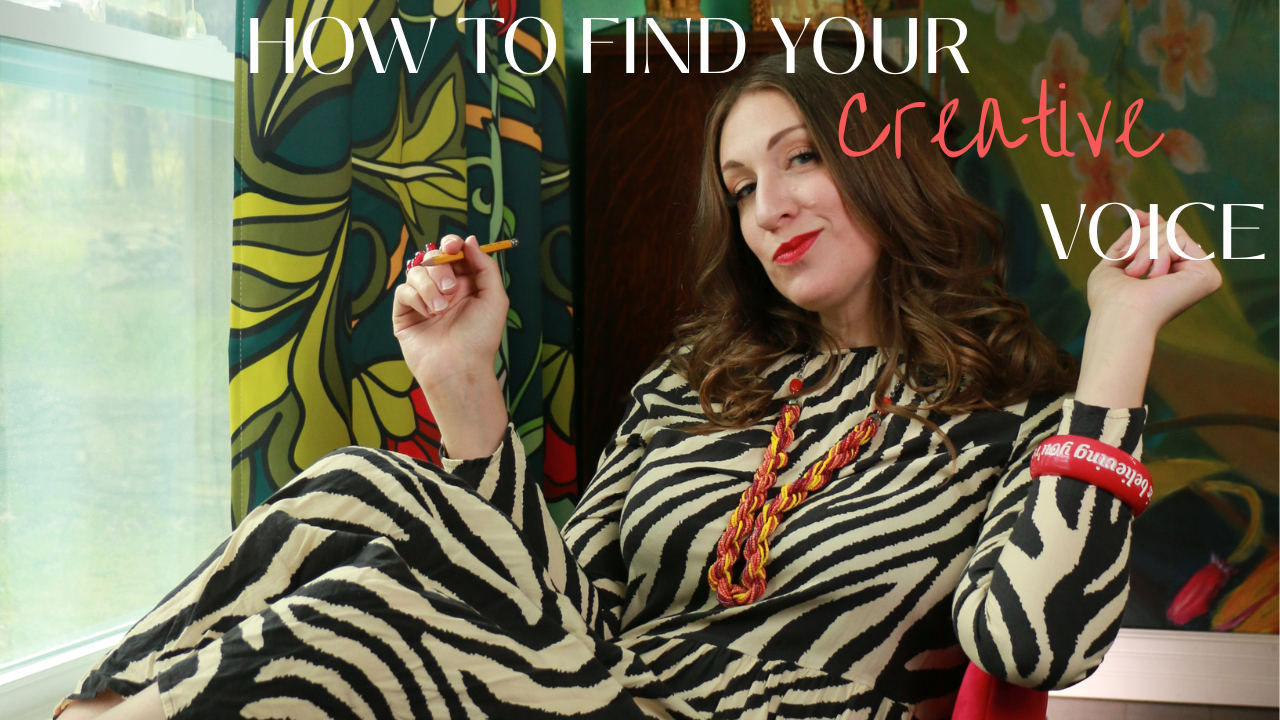
Is any work actually new, or are we all just regurgitating each other's work?
Hey there, creatives, and welcome back, or welcome for the first time. Today we're going to talk about how to find your voice as a creative (or as an artist). I’ve said before that it doesn't matter what your medium is - I'm in the theater industry, so I'm a playwright, producer, actress, dancer. It doesn't matter if you're a painter, musician, photographer, writer, whatever it may be. I think that we are on very similar journeys as creatives.
So, how to find your voice? Maybe you're already really established and you feel like, sister, I already found my voice. If that's true, I don't know why you clicked on this blog, but I’m glad you’re here! Everyone is welcome here. My guess is that if you did feel inspired to click on this post, you might be newer in your creative craft or just haven't really found your confidence in the craft yet.
How do we find our voice? Of course, that's an expression. It doesn't necessarily mean your voice as a singer or something, right? But what's your creative mark? What's your style? What's the thing that sets you apart as you?
Story time. I remember about 15 years ago, I was in my 20s. We had just started our company, Melonlight, which at the time was Melonlight Dance. (It's now the Melonlight Theater. The name change is relevant to finding my voice.) We were developing a professional dance company, figuring out how to produce full dance shows that had this narrative edge, but no written word at the time. I just really wanted to create this movement form that felt all my own. I had studied modern and ballet and hip-hop and world styles, and then very, very studied - at a professional level - ballroom and partnership dance of all styles. It was a huge mishmash of dance forms. Certainly, there's got to be a way for all of those to correlate. For me to create this movement technique that is mine, that would be so unique for a company. I remember admiring dance companies and the greats like Martha Graham, Horton, and Alvin Ailey, but what's my voice? What's my movement voice as a dancer, as a choreographer?
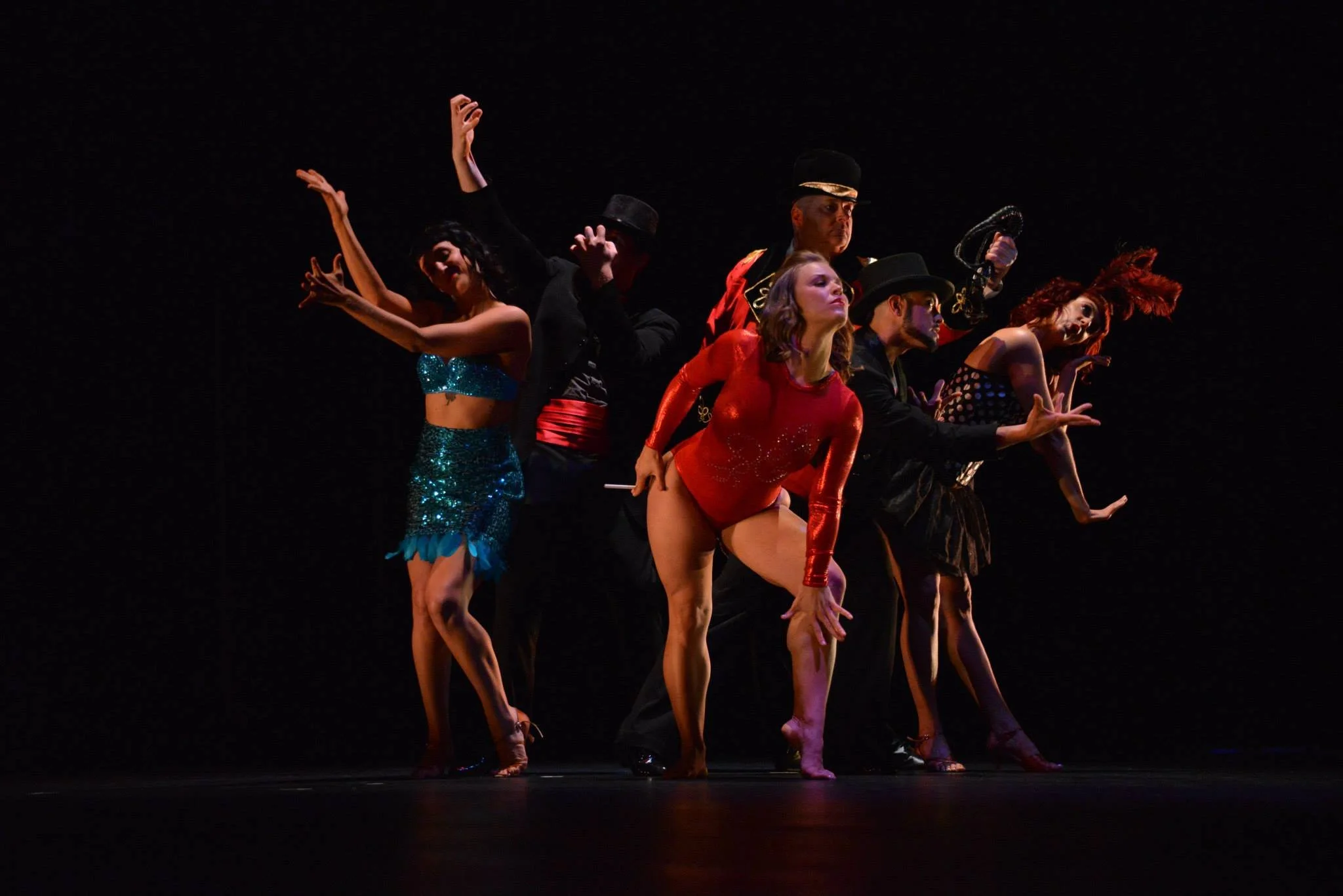
I remember like really pondering it. I'd have dance notebooks and really hash it out. We'll have this warm-up that's unique that we always do, and it sets the tone and the technique of our movement form, and you'll see this unique style that comes out on stage and it'll be all the rage. I remember forcing it so hard. I was 25 or 26, so I had been studying for quite a long time; but I had just launched my own company. To try and push out this unique voice and movement expression in my first years really doing this work in a company on my own was kind of crazy. I pat myself on the back for the ambition and the drive, but I kept trying and coming up empty. It was kind of disappointing. It was like everything I did had already been done.
I went down the philosophical tunnel of like, is any work actually new or are we all just regurgitating each other's work? (We can have that conversation, but if we're going to do that, let's pour a glass of wine or something, right?) I was really pushing it so hard. I was practicing with force. I also happened to be a very studied yogi. I don't teach yoga so much anymore, but I went down that rabbit hole as well and studied yoga. That really opened up a spiritual portal for me, which is kind of why I don't teach it anymore. It's become a really personal spiritual space for me, and not one that I really enjoy teaching as a movement class when I feel like it's such a teensy little snippet of a really big spiritual world. So I kind of savor that for myself in a lot of ways. But force practicing… without force? I was forcing so hard, this movement technique, this movement style, my voice to come out. Yoga teaches us to practice without force. I think that's a really helpful lesson for all creatives to practice: to produce and create without force, to let flow right.
At some point did just kind of have to give up. I didn't give up my creative practice, though. I didn't give up the idea that I wanted to have an identifiable voice as an artist, but I did give up the idea of trying to find it. Instead, I just kept producing. We did another show, then another show. I choreographed another piece. Our shows slowly started to become more of a storytelling world. Little by little, written word (because I have always been a writer) started to creep its way into the shows. I still was not writing full-on theatrical scripts, but it was starting to happen almost like I didn't know it was happening. We knew we were consciously creating these shows, and then we relocated our company so that we could start running shows on the Broadway model, which I mentioned in a previous post: create a show and run it again and again, and keep getting paid for that one piece of creative work over and over again. When we moved, we took that opportunity to kind of reshape our company. I said, “I want to write scripts. I want to shift from being a dance company to being a theater company who features really good quality dancing in every single show.”
So I started writing full-on scripts. My husband is a brilliant director, and he started directing them. It was a really cool shift! But again, it didn't really happen with force. It happened with this urge to write things. I want to tell more complex stories than dance would lend itself to. That was 10 years ago. Now we've written tons of scripts, produced tons of shows. I woke up one day and realized I was 40 and had built the company I had been dreaming of creating forever. I thought, “Whoa, there's my voice. There's our voice because my husband and I create together. There's our voice as a creative company.”
I stopped trying to create it and I just created more and more work, and then one day, we had a voice. The lesson as it should be: don't try to create your voice. You just need to create more work.
Let your work flow. Let the work come without force. Create without force. and just keep creating. Do not worry about if you're hitting the voice, if you're doing something groundbreaking that's never been done before. Just create work that's coming authentically from your heart, and create more of it, and then create more of it; because the more you create, the clearer the voice will get.
You can't really force it or rush it. You have to just create enough work so that there shows up this pattern or transition - even this journey or evolution of your voice. We don't have a voice if we just have one piece of work. We have to have a body of work and then we can look at it from different perspective of continuity. I see the threads. I see the thing that threads from this piece of work into that piece of work that creates the whole body of work.
Whatever your medium is, if you're a musician, a painter, a theater maker like me, it doesn't matter. Your voice will reveal itself. If you continue to create without force, you've got to add the second ingredient, which is time. Being a creative is lifelong work. Aren't we so lucky? To get to create again and again? We're never done creating.
Give it another 5, 10, 20 years and then step back and look at it. You will find your voice from the body of work you have created.
Did I answer the question how to find your voice as an artist? Sort of. You might not like the answer, to stop trying to find it and just keep creating and be proud of the work that you create. Create from an authentic space inside yourself. Create without force and your voice will reveal itself. That's it.
If you enjoyed this post, and if you want to dive deeper into the creative pool with me, please do sign up below to receive my weekly email.
That's a wrap, darling. Now, go do your creative work.