Why Artists Stay Broke (And It Isn’t Talent)
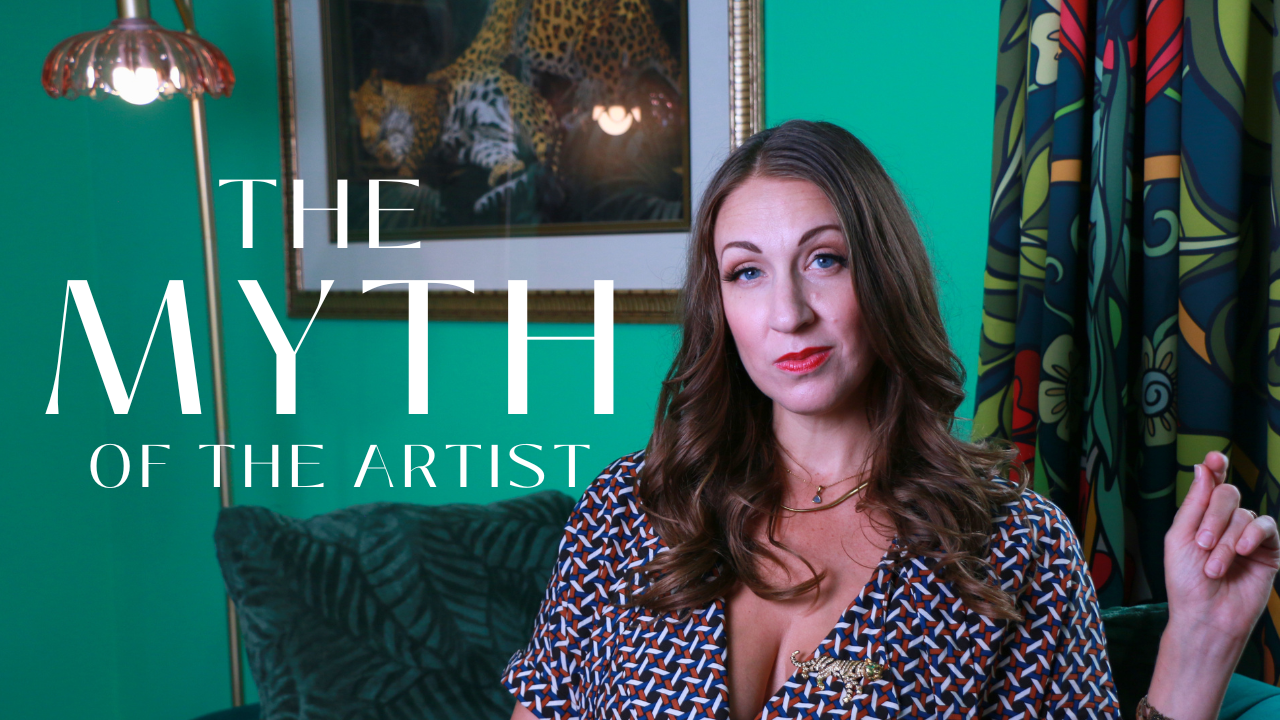
Hey there, creative souls. Welcome back to the Creative Spotlight. Today I want to give you an important piece of advice: don't ever call yourself a starving artist unless you want to be one. That's it. That's a wrap.
I'm kidding, of course, there's a lot more to be said about this. I have been a creative, an artist of types, for my entire life. Since I was a little girl, I was drawing and writing and making books, and then I was doing choreography in the backyard. I was a Little Mermaid. I starred in The Little Mermaid. Did you know that was my first big role?
Anyways, I grew up with the starving artist myth, right? The myth being that artists are starving, that it's a great way to be poor. If you want to be poor, then pursue art, right? I think it's really culturally baked in. Of course, I'm speaking as an American, so if you're watching from somewhere else in the world, do share! I'm curious, does this myth exist across other cultures or do you find something else to be the norm in your culture? Because here in America, the starving artist idea is still going really, really strong and you can see it all over the place.
For a lot of us growing up, it's like, "Yeah, I know you're an excellent artist, sweetie, but maybe you should have a backup plan or maybe you should just treat art as your hobby and pursue a real career."
It's hard to make it in the arts world. We see it in a more natural public space like when a lot of arts classes are free or expected to be free. Most music online is now free and those musicians have to hustle in a whole bunch of other ways to get paid. We see a beautiful public sculpture and it's free to gaze upon. Not saying that's a bad thing. There's a lot of ways in which it's free - the art museum is often free. We see culture telling us it should be free. The library, all those books, they're free.
Now, don't get me wrong, I'm not saying that art shouldn't be free. We're going to get into that. I think maybe the reason that art sometimes is free is because it is culturally so important. It's such a part of who we are and how we express. There's this inherent understanding that art improves our internal lives from a soul perspective by our physical senses experiencing a beautiful world that is full of art. It enriches us, and it's deeply deeply important.
Of course, I'm biased, but I also think I'm just human and art should be appreciated and it should be all around us. I'm not saying that art should never be free, but definitely that this idea of art being free does not support the artists. A lot of times artists don't end up getting paid until they're dead. That happens for painters, musicians, authors - countlessly, time and time again. How fair is that to us who are working our tails off right now to create art and put it out into the world and have our own contribution, but then don't get paid for it till we're dead? That doesn't really work.
So what do we do with the starving artist mentality?
First is don't embody it. Don't own it. Don't claim it. I had to push a lot of that aside when I decided I'm not going to go the traditional route and get this big fancy degree to try to get a job doing a bunch of stuff I don't want to do. Instead I decided I'm going to take the leap and pursue a creative career despite the world telling me that it's hard to make money doing it… that I'll probably end up a starving artist. Maybe, maybe not. But I know that art fulfills me. My creative process fills me up so much that I was willing to take that risk.
Now that I am an artist and I took that risk, I'm way beyond making a different decision. It's what we do with the starving artist mentality and how we push it aside and not embody it to begin with anyhow.
We've looked at the idea that our culture kind of shapes art as this thing that should be free. Here's one of the way I've experienced it even as a professional: I have a business, I have a theater, I have a venue, I have things for sale and yet I'm still asked (like, a LOT) to give things away for free. I'm not saying that I don't or will never do that, but there's also an idea that I should be happy to do it for free. Oh, you love dancing? You perform? You love performing? Would you come do a performance for us for free? Oh, you teach? That's so important and so inspiring to people. Would you do it for free? If I did all of that for free every time I was asked, I truly and legitimately would be a starving artist because I wouldn't have any time left in a day to do work that's actually being compensated.
And I know I'm not an island here. A lot of people experience this. Shout out to my awesome brother-in-law, Matthew Ray Reeves of The Reeves Brothers. He's a wonderful musician, but he's talked about it, too. So it's not just like in my dance theater world. As a musician, he's asked all the time, would you come play the thing for free? And on one hand, it's a compliment. Thank you, that means you admire and appreciate my work… but you don't appreciate it with your dollar bills, y'all. We artists need some of those, too. We have mouths to feed.
I know that's happening a lot for a lot of us. I do think that some art should be free, that there is a time or place to give it away. Another thing that happens too is would you do it for free? Not only do you love it, but it's a great marketing opportunity. Sometimes that's true, but it still kind of tugs at something in me. Does anyone ask their accountant to do their taxes for free? What if my accountant loves doing taxes? Should she just do it for free? That's absurd. No one would ever expect her to do that. But there’s something about art, because it's this passionate joyful thing, that we should do it for free.
It rubs me so much the wrong way that something I love to do shouldn't be paid. You realize the insinuation there is that we should only be paid for work that we don't enjoy doing. We're not living in that culture anymore. Honestly, what an abundant world we live in that most of us are trying to pursue careers that make us happy, right? We don't just have to dig ditches because that's the only option. Our culture supports some things more than others, too. How much does it cost to go see a professional football game? It's insane. Are you telling me those athletes don't enjoy their work? Should they just do it for free then? You know they're not going to and no one's going to expect them to. Did you know that the Super Bowl halftime artist doesn't get paid? They do that for marketing value. I know these are big names and they're gonna be okay because they worked their way up through the hustle. Bad Bunny's gonna be okay, and he should be because I love him so much. But he did that show for free, for marketing. Yes, he'll probably see the trickle down effect on his Spotify and other things happening, new fans coming into the world. Look at that expectation, though: all the players are getting paid multi-millions, but the halftime artist is expected to do it for marketing value. It really is baked in culturally.
If you're suffering from this idea that it's hard to get paid as an artist, it's not your fault. You're being brought up in a culture that supports that. So, how do we get around that? One of the best ways is to start valuing your own work is to know when you’re tapped out on the free offerings. It’s a lot. I had to re-evaluate what I can give away for free and what I can't. We used to be asked to donate a lot of classes, workshops, and performances. I remember one distinct time this happened on our social media. We had posted, hey, come and join our flash mob that’s open to any experience level. It's going to be fun, we're going to perform at this parade. Very community rich. This is going to be a good time for us to come together and create, and an even better time for us to go in a larger community and share the work that we did.
That's what art is - it makes us feel connected and happy and appreciate the beauty.
Then someone commented, "It should be free."
It was as though they were appalled that I had an enrollment fee. I was appalled - and actually offended - that they were appalled. You think it should be free? You're admitting that it has value, that you’ll show up and watch this thing, but then you're not equating that value to my time and expertise. I think it's painful. I've worked through a lot of this, but can you see there's still some pain and scars there. I'm sorry, does my art have no contribution? You all love it, and you all want it to be there, but nobody wants to pay for it.
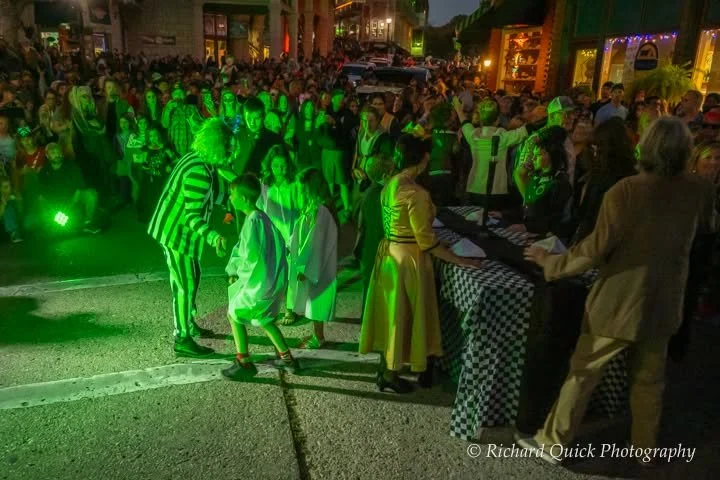
If you're experiencing any of that, you're not alone. A lot of us artists feel that way. When I say artists, I mean all of us: authors and playwrights. actors and dancers. musicians and so on.
Two steps that helped me navigate this better in my own artistic career:
One is to choose thoughtfully what I give away for free. Now I will give away tickets to shows that I'm selling anyways. I'm already going to sell tickets to that night. I will be getting paid for that night. So when a 501(c)(3) reaches out and says, "Hey, we're raising money for XYZ. Can you donate tickets?" I go, "Yeah, I can. It doesn't cost me anything extra. I do get to spread the marketing reach to their silent auction or whatever event they're having." I get to feel the goodness of giving away some of my art, but it's not tapping into my time, and it's not draining me of my own limited resources, time, energy, effort. I will give away classes occasionally, and I'll typically do that for youth programs because there is a payback there. When you light up that inspiration in the next generation, like I have chills talking about it because we've had that happen for a lot of the kids in our programs over the years. That's worth it, but I can't do it every week. It has to be a limited moment where I can give away that kind of time. So, I'm much more thoughtful about what I'll give away. And yes, I love to give it away. I used to even limit how many times I would give away to a silent auction, but now I just say yes every time. Yes, I can always give tickets. I can always do that. I can't always give a class because I have a tight schedule. So, that's one way is to yes, give away things for free, but be really thoughtful about whether it gives back to you or you feel like it's just draining you.
The second piece is, and this might be harder depending where you're at in your artistic journey and if you're monetizing yet or not, you have to learn to value your own work. You have to put a price tag on it. This is for you, but it also affects the entire artistic ecosystem. Let me give you a small example: my husband and I with our wonderful team have an immersive theater here in Eureka Springs, Arkansas. It's a tourist town. It's a small town, but it has a lot of tourism. I will admit, we have one of the highest priced tickets to go do a thing, like to go see a show. Ours is one of the highest priced. It's not because I'm being greedy. It's because I want to make sure my team is paid. I'm not asking them to do it for free, and I have to pay for the venue where we can do these performances, on top of marketing and all of that behind-the-scenes stuff. We have expenses, plus I need to make sure my husband and I get paid at the end of the day, too. I know our experience is worth it, so we have a higher priced ticket than maybe some of the other things around town.
Now, let's say there's someone down the street from me and they're also doing a theater show and they price their event at one sixth of mine. I have a $60 ticket and they have like a $10 ticket. Okay, they probably have their own reasons for establishing their pricing, too. But maybe they're worth more than that. all their time, effort, energy, creativity that went into it; and also not just them, but how does that affect their artistic ecosystem? Next to that, my ticket looks really expensive, which means one of two things: my product is a lot better than theirs, or I'm being greedy, right? Actually, that's not true. Yes, some of us have different levels of skill sets, so there is a pricing modality that comes into that: my ticket prices have increased over the years because our shows have gotten better, our expenses have gone up. We have to think about that when we give away something for free. Maybe there's generosity in it. Maybe there's doubt in your own value and there's definitely a contribution to the overall ecosystem that says don't value this, it should be free. I have to disagree about 9 out of 10 times. It shouldn't be free. You deserve to get paid for your work.
The one individual thing we can do without striking up a cultural movement is to value our work. You're going to have to tell the masses what it's worth. You're going to have to tell them what you're worth. We all have equal worth no matter what our skill sets are, but as an artist, you're going to have to insist that you have value. That's going to mean sometimes saying no when people ask for something for free. It might mean raising your rates if you feel like you're ready to do that. We're going to have to teach the world that look, if you're going to pay $800 to get a ticket to the Super Bowl, you need to pay $60 to get a seat at the theater. Let's at least value our work by putting value, a price tag on our own artistic work.
The two questions I want to leave you with are:
Do you give your artistic works away for free? How do you feel about that? And does it need to be revised? (That's one question with three parts.)
And the second question is, do the rates, the price tags that you put on your artwork, feel like a fair reflection of your artistic skill and the value and contribution that you are adding to the world through your artwork?
Those are the two things I invite you to reflect upon on your own artwork so that you are taking care of yourself, not becoming a starving artist, and also contributing positively to the art positively to the art ecosystem.
So that's a wrap. Now you, my darling, go do your creative work.